
Fire Door Repairs & Replacement
We repair and replace fire doors in existing buildings: gaps under the door, smoke seals, closers, latches, lock holes and damaged leaves. Every fix uses hardware the door's manufacturer approves, and every door is photographed and documented for your IQP and BWOF.
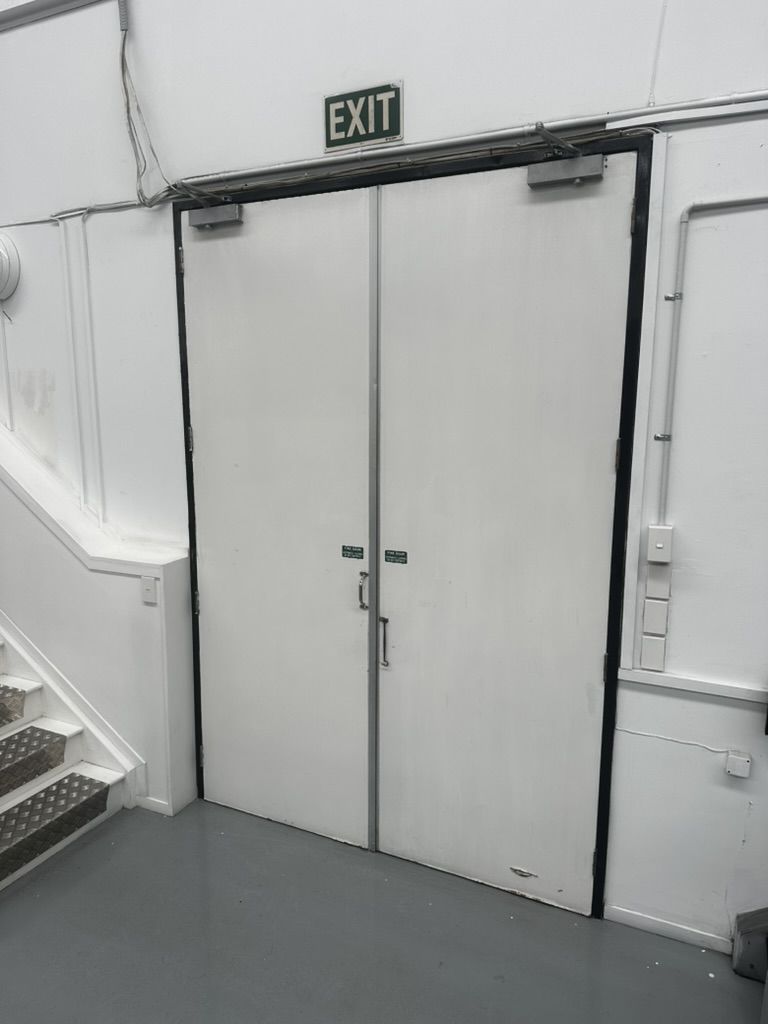
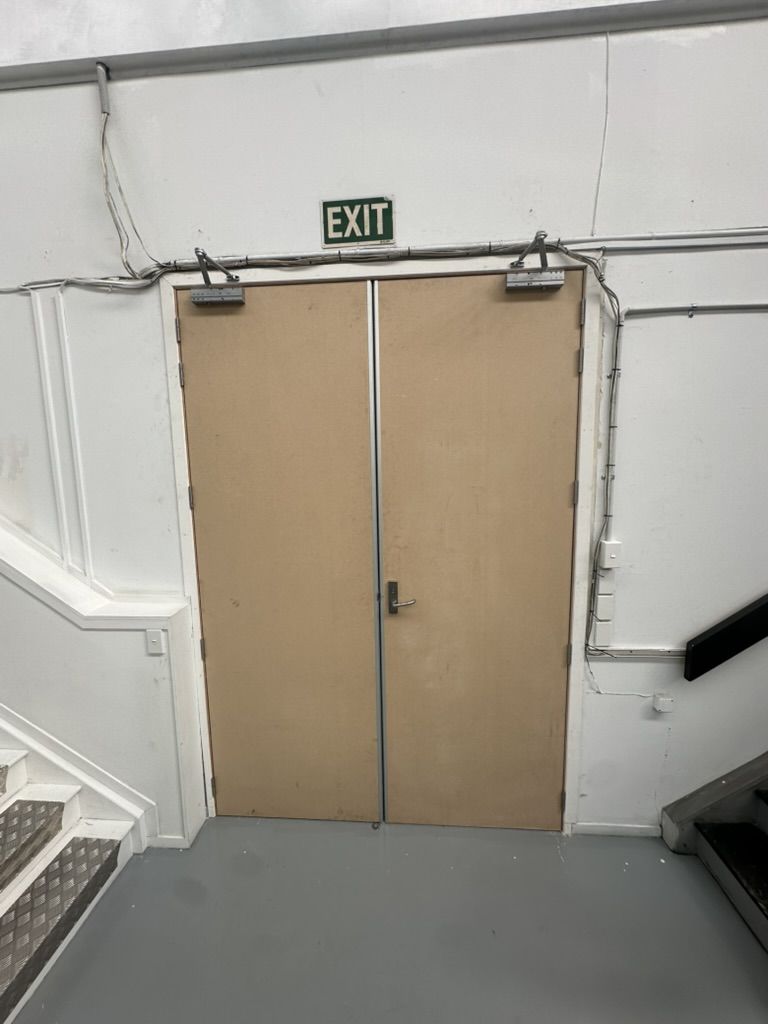
What makes a fire door a fire door?
A fire door is not just a heavy door. It is a doorset: the leaf, the frame, the hinges, the latch, the closer and the seals, fire tested together as one assembly. The rating on the tag only holds while every one of those parts is the type that was tested, or one the door's manufacturer has approved since.
That is why fire doors fail inspections so often. A lock gets swapped, a seal is painted over, carpet is replaced and the gap underneath changes, a closer wears out and the door stops latching. Each one is a small change, and each one takes the door outside what was tested.
Fire doors are checked every year as part of the Building Warrant of Fitness. When your IQP or Auckland Council raises one, the fix has to be something the door's manufacturer accepts for that door. For how doors fit into the rest of the building's fire separations, read our beginner's guide to passive fire protection.
Fire door defects we fix
The items that come up most on IQP reports and Council audits, in apartments, offices, schools and commercial buildings.
Gaps under the door
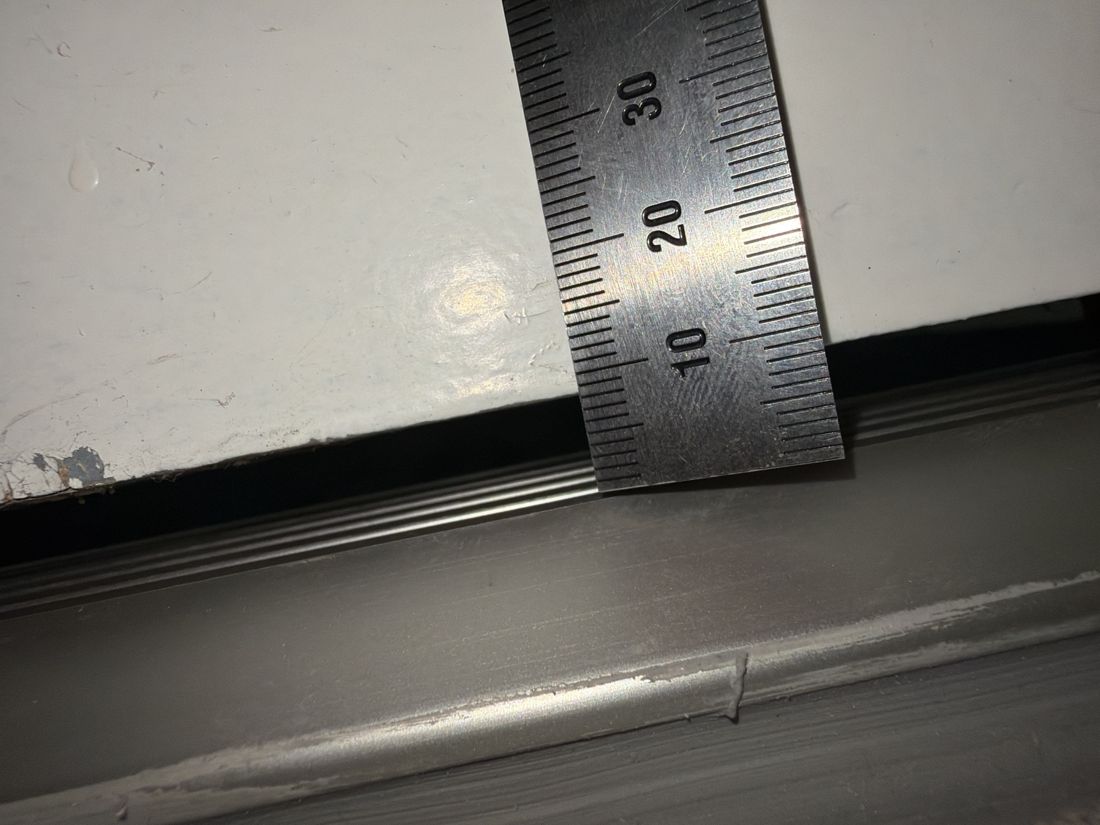
The gap between the bottom of the leaf and the floor covering has to sit between 3 and 10 mm. We bring oversized gaps back with a threshold plate or a tested bottom seal the door maker accepts. Why a drop seal or brush seal is not the fix.
Smoke and intumescent seals
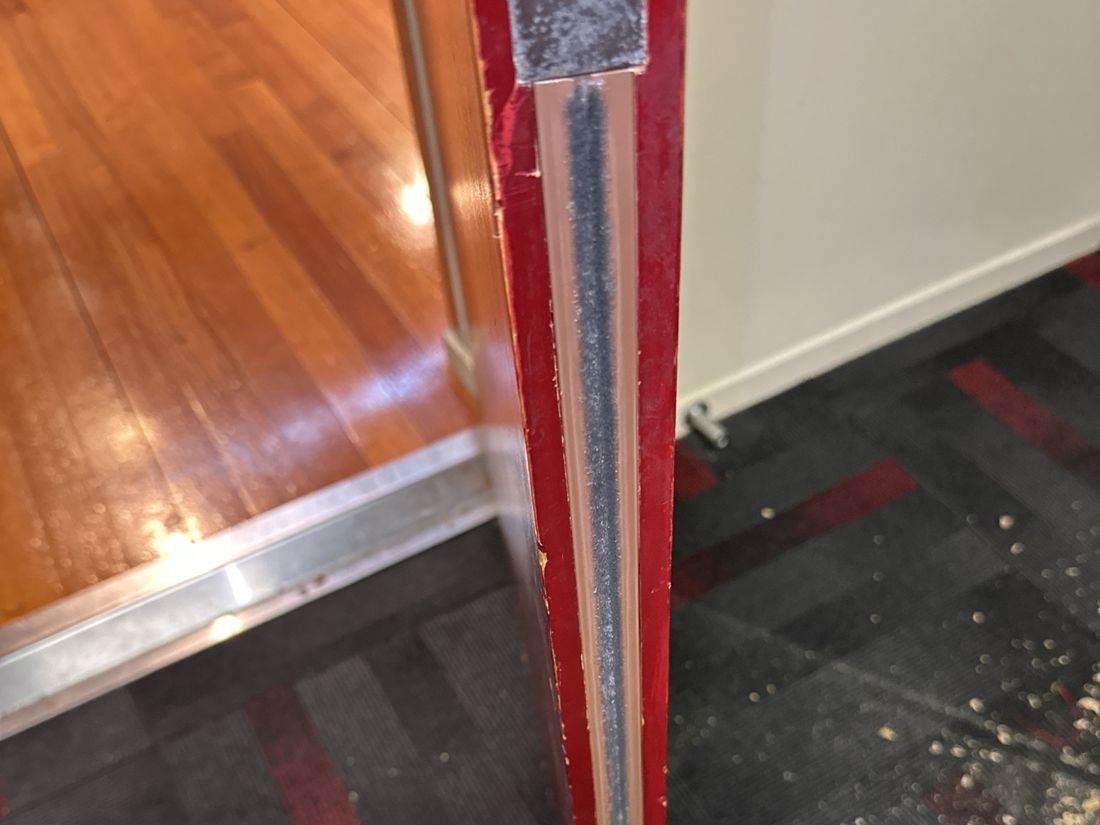
Missing, painted-over, torn or wrong-type seals around the frame and leaf, replaced with the seal the door maker lists for that doorset.
Meeting stiles on double doors
The gap where two leaves meet is one of the tightest tolerances on a doorset. We correct sagging leaves first, then fit the maker's meeting-stile seal.
Closers, latching and self-closing
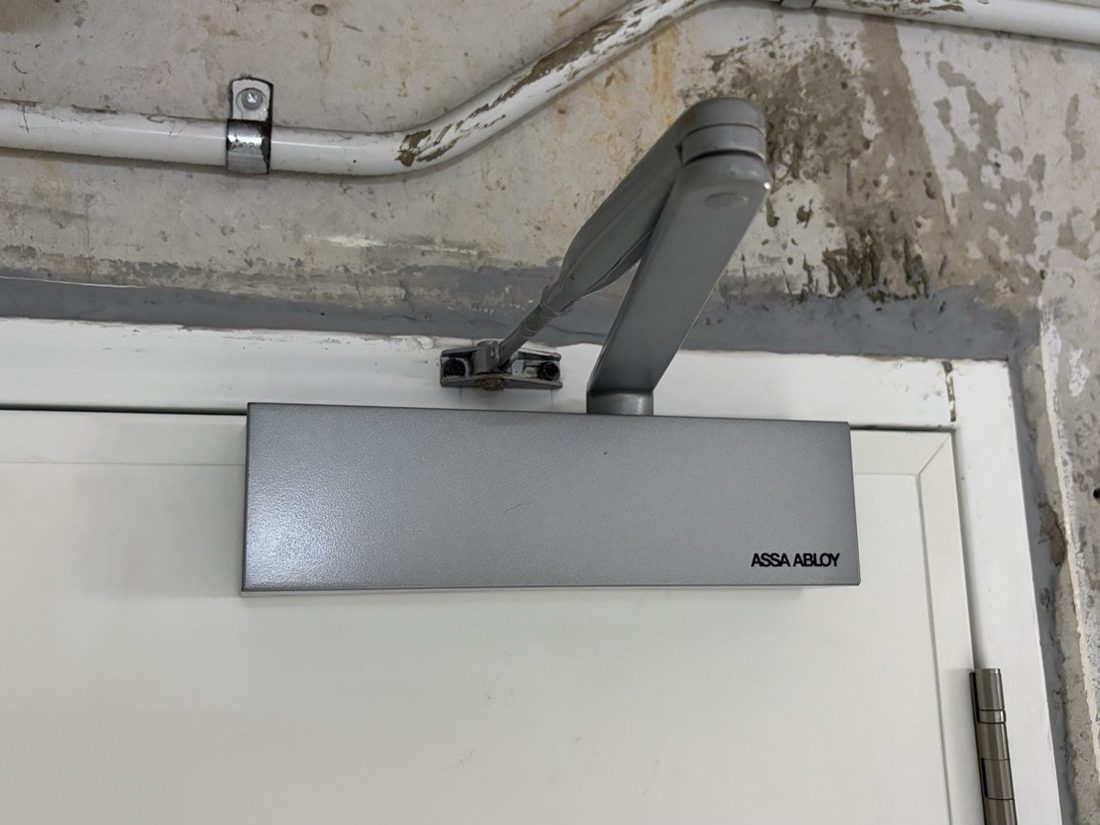
A fire door has to close and latch on its own from fully open. We replace failed or missing closers and adjust or replace latches that do not catch.
Locks, deadbolts and holes in the leaf
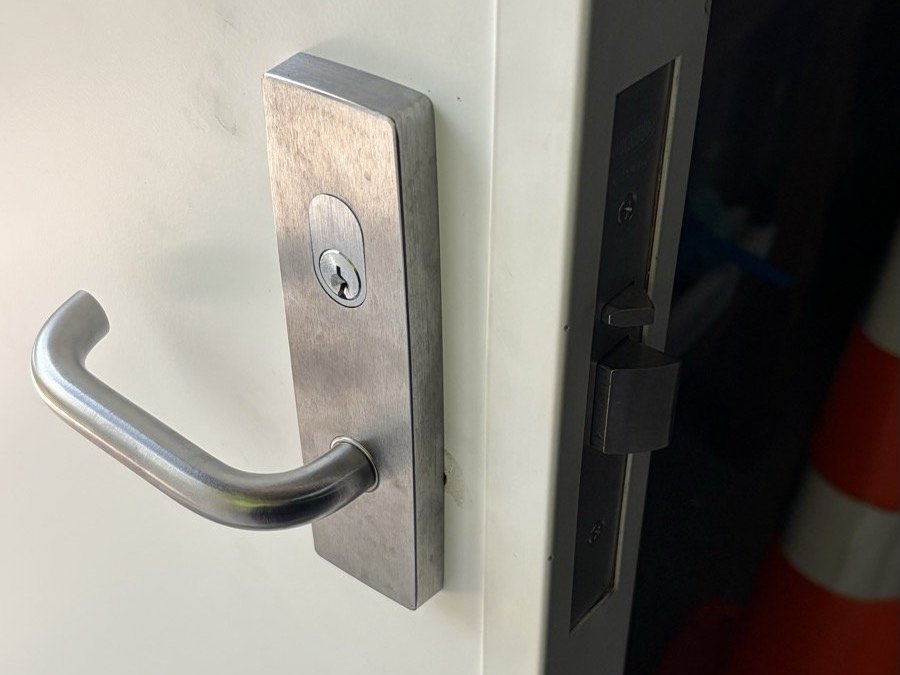
Deadbolts and digital locks that were never approved for the door, and the holes they leave behind. We fit a compliant self-latching lockset and deal with the holes properly.
Damaged or untagged doors
Leaves that are split, water damaged or cut down, and doors with no tag to prove what they are. Where there is no approved repair, we replace the leaf or the whole doorset.
Can it be repaired, or does it need replacing?
It depends on the door and the defect. We give you a straight answer once we have seen the tag.
Usually repairable
Worn or missing smoke and intumescent seals. Gaps under the door within the range a threshold plate or tested bottom seal covers. Closers that have failed. Latches that do not catch. Hinges that have dropped. Non-approved locksets swapped for an approved self-latching one.
Usually replacement
Leaves that are split, delaminated, water damaged or trimmed down. Doors with no tag and no way to identify them. Holes and cut-outs the manufacturer will not accept a repair for. Ordinary doors fitted where a fire door is required. Gaps beyond what any tested method covers.
Replacement doorsets are made to order, typically five to six weeks from order. We measure and photograph the existing door first, then install the new doorset, fit the hardware and check it closes and latches.
Fire door work, photographed and documented
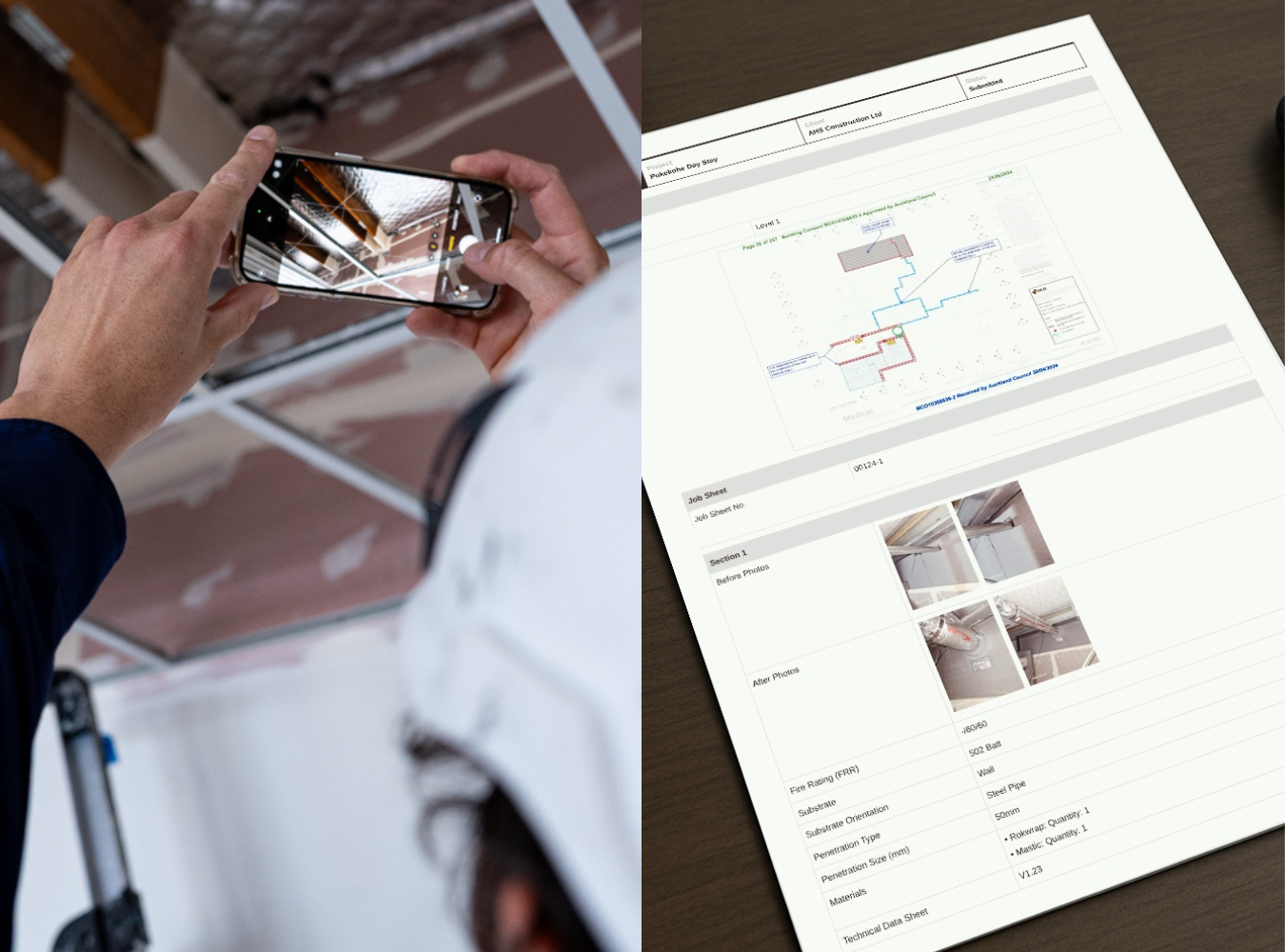
Every door gets a tag photo, before and after photos and a record of the hardware used.
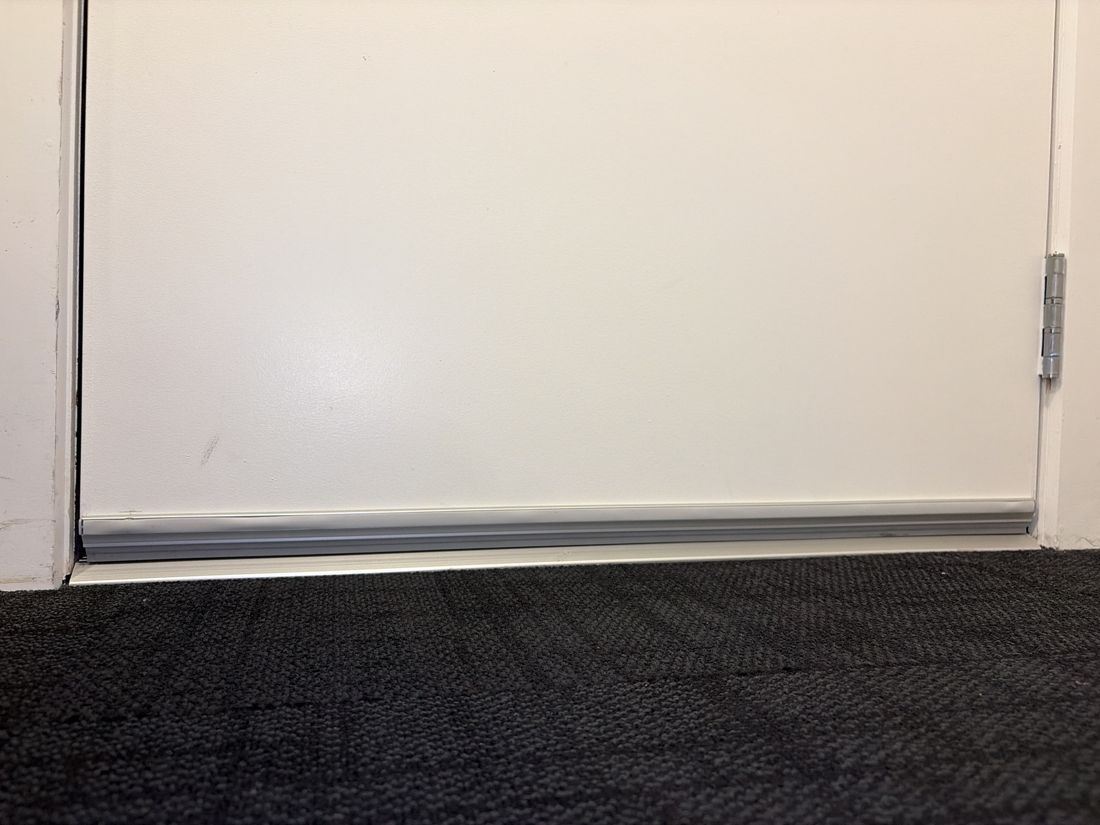

Fire door repairs you can prove
A repaired fire door looks much like it did before. What closes the item out is the record.
- Door tag photo showing the manufacturer, model and rating
- Before and after photos of each door, taken from the same angle
- Hardware record naming each product fitted and the door maker's approval for it
- Closing check recorded: the door closes and latches from fully open
- Completion report and repairer statement handed over so the IQP can close out the defects raised against their Form 12A
How a fire door job runs
Identify the door
Send the IQP report or Council letter and a photo of the tag on the hinge edge of each door. The tag tells us the maker, the model and the rating.
Check what the maker approves
We match the defect to the manufacturer's approved hardware and repair methods for that door. Where there is no approved repair, we tell you before pricing.
Repair or replace
Seals, plates, closers and locksets are fitted to the maker's instructions. Replacement doorsets are ordered to suit the opening and installed with their hardware.
Test and document
Each door is checked to close and latch from fully open, photographed and recorded. You get the report and repairer statement for your IQP or Council.
Fire door work for building owners and managers
Body corporates & property managers
Fire door defects from the annual inspection fixed in one visit where possible, with the paperwork your committee and IQP need.
IQPs & compliance companies
A contractor who identifies the doorset first and works to the door maker's list, so the fix stands up when you re-inspect.
Building owners & tenants
Clear advice on whether a door can be repaired or has to be replaced, before you spend money on it.
Schools, aged care & facilities teams
Doors that take heavy daily use: closers, seals and latches kept working, and damaged leaves replaced.
Fire doors fixed to the door maker's rules
- 1
We identify the doorset first
The tag on the hinge edge tells us who made the door and what it is rated to. Every repair starts there, not with a product.
- 2
Only what the door maker approves
Seals, closers, locks and plates come from the manufacturer's approved hardware list for that door. Nothing is improvised.
- 3
Repair where it is allowed, replace where it is not
We tell you which it is and why. Some defects have no approved repair, and we say so before any work is priced.
- 4
Evidence your IQP and Council accept
Tag photo, before and after photos, the hardware used and a repairer statement for every door.
Fire doors, common questions
The gap under my fire door is more than 10 mm. Does it need a new door?
Can I just fit a drop seal or brush strip to close the gap?
We removed a deadbolt or digital lock and there are holes in the door. Can they be filled?
Can an ordinary door be upgraded to a fire door?
My fire door has no tag. What happens?
How long does a replacement fire door take?
Is the closing speed of a fire door part of the rules?
What does fire door repair cost?
Often fixed on the same visit
Passive Fire Remedial Works
The rest of the IQP defect list: penetrations, openings and gaps closed and documented.
Service Penetrations
Pipes, cables and ducts through fire-rated walls and floors sealed with tested systems.
Openings & Voids
Holes and damaged linings in fire-rated walls rebuilt to the wall's tested system.
Fire door raised on your BWOF report?
Send us the report and a photo of the tag on the hinge edge of each door. We will tell you whether it can be repaired and what it involves.