
Fire-Rated Duct Wrap
We wrap ventilation, smoke, kitchen exhaust and pressurisation ducts to the required fire resistance rating, using tested systems and the PS3 documentation your IQP and council require.
What is fire-rated duct wrap?
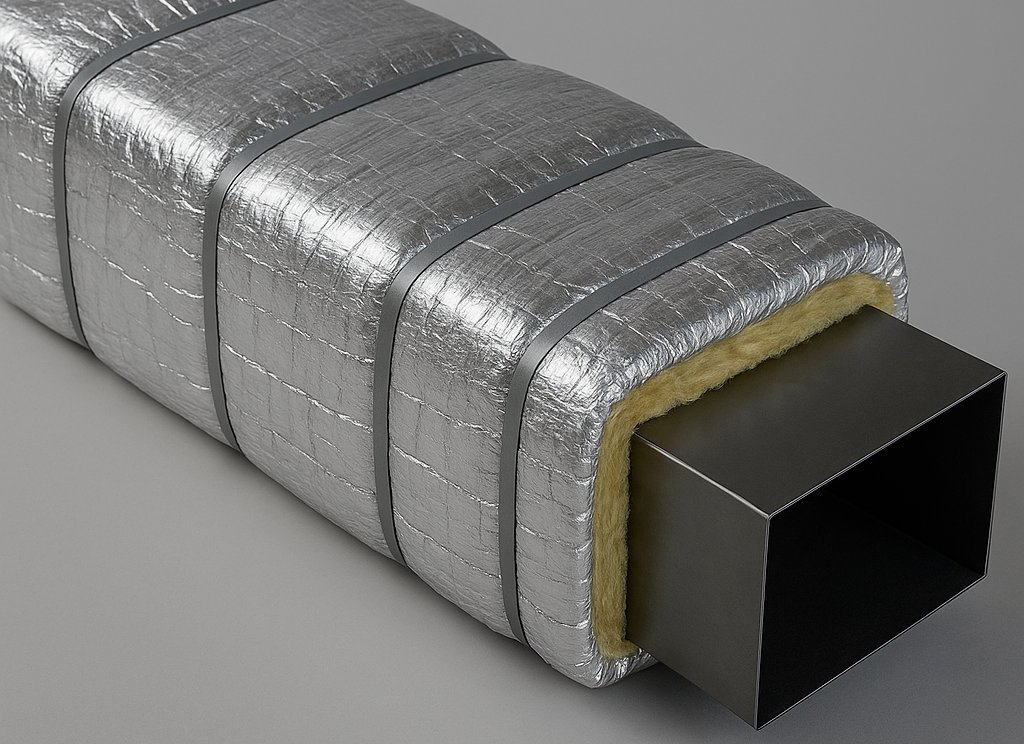
Fire-rated duct wrap is a tested flexible insulation system wrapped around HVAC, smoke, kitchen exhaust and pressurisation ducts to give the ductwork its own fire resistance rating, typically -/60/60 or -/120/120 minutes.
When a duct passes through or runs within fire-rated construction, the duct either needs a damper at every penetration, needs to sit inside a fire-rated shaft, or it needs to be wrapped so the duct itself is fire-rated. Wrap is often the cleanest, lowest-impact solution, especially where dampers would restrict airflow or where building space is tight.
The ducts we wrap
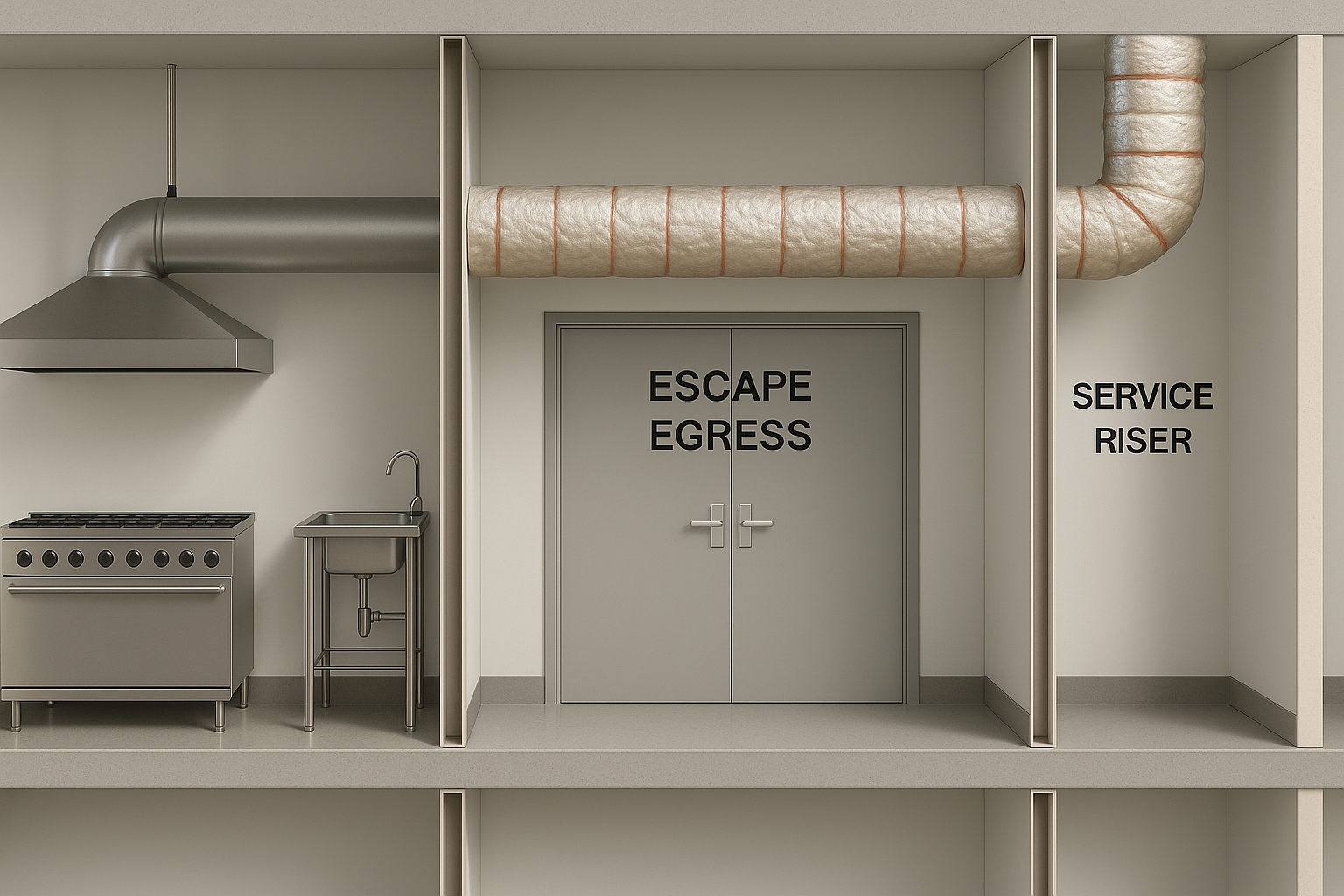
Wherever a duct needs its own fire resistance rating, for compartmentation, smoke control or kitchen exhaust, we install the right tested system for it.
Kitchen exhaust grease ducts
Wrapping kitchen exhaust ductwork to maintain fire resistance through fire-rated construction, without needing a fire-rated shaft.
Stair pressurisation ducts
Fire-rated wrap to stair pressurisation systems so the pressurisation duct stays compartmentalised from the spaces it passes through.
Smoke extract ducts
Fire-rated wrap to smoke extract and smoke spill ductwork, keeping the duct compliant under the high temperatures of a smoke event.
Ventilation through fire-rated walls & floors
General ventilation ductwork wrapped where it passes through fire separations and the use of a fire damper isn't desired.
Plant room ductwork
Wrapping ductwork in or leaving fire-rated plant rooms so the fire separation isn't compromised by the duct route.
Multi-compartment risers
Vertical ductwork in risers passing through multiple fire-rated floors, wrapped so the riser doesn't need its own fire-rated shaft.
When fire wrap is the right choice
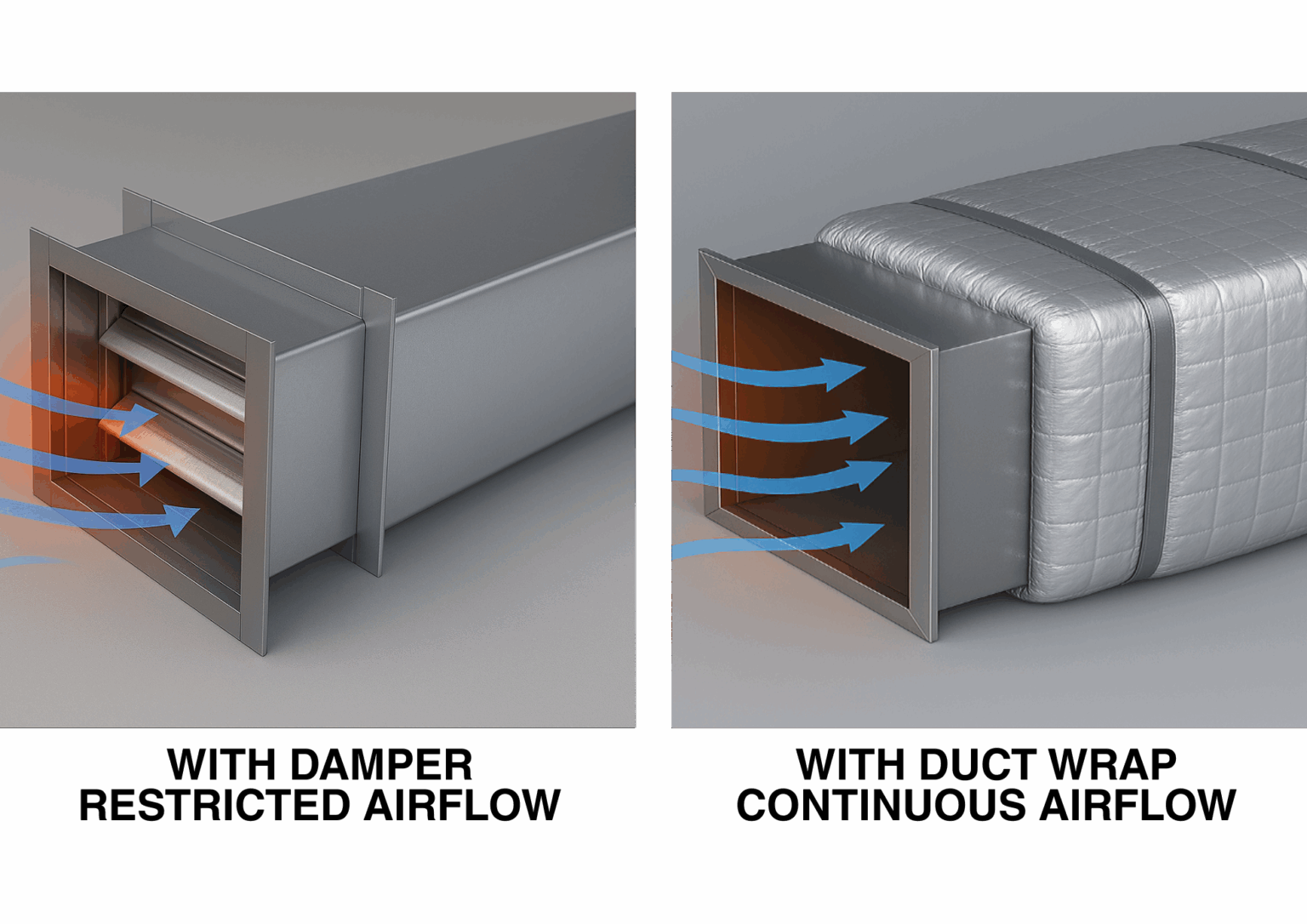
Fire dampers and fire-rated wrap are different tools for different jobs. A damper closes the duct off when activated, which doesn't suit systems that need to keep operating in a fire, kitchen exhaust, stair pressurisation and smoke extract. That's where wrap comes in: the duct stays operational because the rating is on the outside of the duct.
Fire damper
- Closes when activated, the duct stops carrying air
- Can't be used where the duct must keep operating (kitchen exhaust, stair pressurisation, smoke extract)
- Moving parts require annual IQP inspection
- Access panels needed at each location
Fire-rated wrap
- The duct keeps working during a fire
- Suits systems that must stay operational: kitchen exhaust, smoke extract, pressurisation
- No moving parts, no annual testing
- No fire-rated shaft required, saves space
The fire wrap systems we install
Tested to AS1530.7 / AS4254, BRANZ-appraised, and installed exactly to the manufacturer's specification.
-/60/60 fire-rated wrap
60 minutes integrity and insulation for general ventilation ductwork passing through 60-minute fire-rated construction.
-/120/120 fire-rated wrap
120 minutes integrity and insulation for high-risk applications and ductwork through 120-minute construction.
Kitchen grease duct wrap
Specifically tested wrap systems for kitchen exhaust grease ducts, the high-temperature, high-grease environment.
Smoke duct wrap
Wrap systems tested for use on smoke extract and smoke spill ductwork.
Stair pressurisation wrap
Tested systems for stair pressurisation ductwork where the supply duct must stay separated from the surrounding spaces.
Round & rectangular ducts
Wrap systems available for round, oval and rectangular duct profiles of any size.

Fire wrap you can prove
A fire wrap install is only as good as the documentation behind it. As a PS3 author, we hand over the records your IQP needs to certify the work and sign it off.
- PS3 producer statements for the installed wrap systems
- Tagged wrap installations recording the system, fire rating and location
- AS1530.7 / AS4254 tested systems installed to specification
- Photos, data sheets and as-built records for council and auditors
How we fire wrap your ducts
A clear, four-step process from drawings to documented compliance.
Review the drawings & site
We review the ductwork from drawings or walk it on site to identify each run and the rating required.
Specify the right system
We select the tested wrap system for each duct type: ventilation, smoke, kitchen exhaust or pressurisation.
Install to the tested detail
Installed by qualified technicians, exactly to the manufacturer's tested specification, with overlaps and fixings correct.
Tag & document
Every wrapped duct tagged, photographed and recorded, handed over with your PS3 and compliance pack.
Fire wrap for the building industry
From full new-build wrap packages priced off mechanical drawings to compliance and remedial wrap on existing buildings.
Main contractors
Reliable, accurately-priced fire wrap packages for the mechanical scope, delivered on programme with full documentation.
HVAC contractors
We wrap the ductwork you install, with the systems specified correctly so your mechanical work passes IQP and council inspection.
Mechanical engineers
Realistic advice on where wrap, dampers or shafts make sense, and accurate pricing for the wrap scope at tender stage.
Building owners & IQPs
Remedial wrap to existing ductwork, with the tagged records and PS3 your IQP needs to sign it off.
Specialists who price it right and prove it
- 1
Passive fire is all we do
Including the duct wrap detail others get wrong: system selection, overlap, fixings and supports.
- 2
Accurate pricing from drawings
We price the full wrap scope off the mechanical drawings, no nasty variations once you're on site.
- 3
Delivered on programme
We coordinate the wrap install around the HVAC programme so we're not the trade holding things up.
- 4
Compliance you can prove
PS3 statements, tagged wraps and as-builts your IQP and council will accept.
Fire-rated duct wrap, common questions
What is fire-rated duct wrap?
When is fire-rated duct wrap required?
What's the difference between fire wrap and a fire damper?
What fire ratings does fire-rated duct wrap come in?
Can fire wrap be used on kitchen exhaust grease ducts?
Does fire-rated duct wrap need a PS3?
How thick is fire-rated duct wrap?
Do you work on new builds and existing buildings, and what areas do you cover?
Need ducts fire wrapped?
Send us your mechanical drawings or a description of the building. We'll scope the wrap accurately and give you a clear quote with the documentation to prove compliance.