
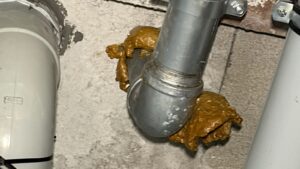
Is fire-rated expanding foam a compliant firestop? (Why the pink foam fails)
Fire-rated foam is tested to AS 1530.4 but is not a tested penetration system under AS 4072.1. Why IQPs reject it, what replaces it, and what it costs to fix.
Practical guidance on passive fire compliance, BWOF inspections, IQP requirements and remediation — for building owners, managers and the trades across Auckland, Northland & North Waikato.

Fire-rated foam is tested to AS 1530.4 but is not a tested penetration system under AS 4072.1. Why IQPs reject it, what replaces it, and what it costs to fix.

Real 2026 cost ranges for passive fire remediation in Auckland, from a single fire collar to a full BWOF defect list, and what moves the price.

Ever seen a rating like 60/60/60 on a building element and wondered what it means? A Fire Resistance Rating (FRR) tells you how long

Your IQP or Auckland Council has flagged passive fire defects. The three letters you might have, what each means, who has to do what, the evidence council wants, and the deadlines.

Passive fire defects are often raised during BWOF inspections, Council inspections, or IQP reviews. Sometimes these defects are valid and need rectification. Sometimes they

Passive Fire Protection in Auckland Passive fire protection requirements in Auckland are being scrutinised more closely than ever, particularly in older commercial and multi-use

Architects, designers, and project managers play a pivotal role in ensuring building safety through effective passive fire protection. This post delves into the technical

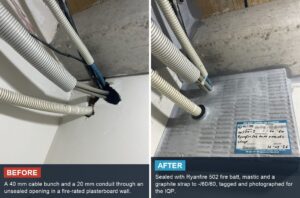
Why bundled pipes, cables and ducts through fire-rated walls fail BWOF inspections in older Auckland buildings, and how tested multi-service systems fix them.

How conduction, convection and radiation move fire through a building, why a hot metal pipe can ignite the next room, and how insulation and FRR stop it.

What passive fire protection is, how fire-rated walls, floors, collars and seals stop fire spreading, and what NZ building owners must do for BWOF compliance.